
Investment Strategy
Why Invest in Land? The Case for Land as a Long-Term Asset
Tangible vs. Financial Assets
In an era characterised by market volatility and economic uncertainty, the appeal of tangible assets has never been stronger. While equities and digital currencies are subject to rapid fluctuations based on market sentiment, land represents intrinsic value. It cannot be destroyed, stolen in the traditional sense, or eroded by the failure of a financial institution. This permanence provides a robust foundation for long-term wealth preservation.
Supply Constraints
The fundamental driver of land value is its absolute finite nature. As Mark Twain famously quipped, "Buy land, they're not making it anymore." With global populations expanding and the demand for housing, agriculture, and infrastructure intensifying, the pressure on available land continues to mount. This is particularly acute in mature markets like the UK, where strict greenbelt regulations severely limit the release of new land for development.

Planning Gain Potential
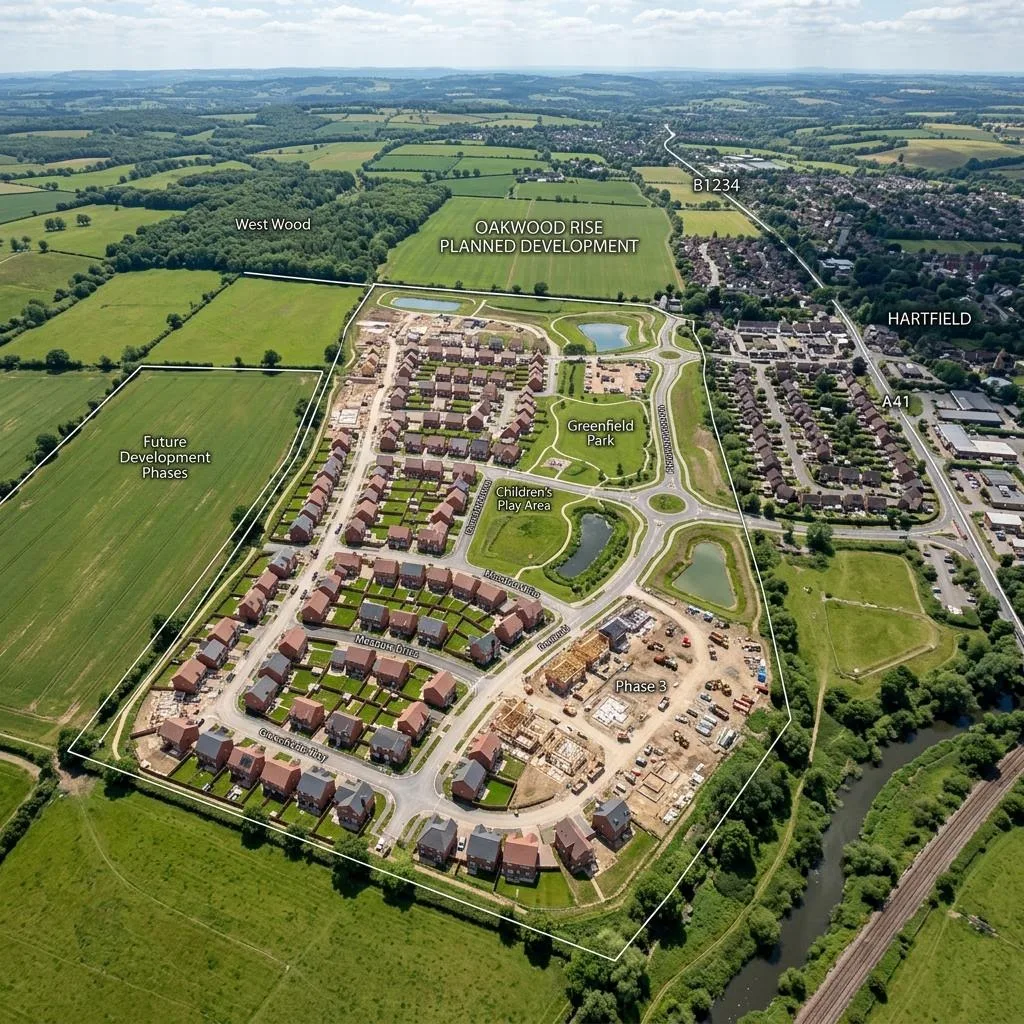
One of the most lucrative aspects of land investment is the concept of "planning gain." This occurs when agricultural or amenity land is successfully rezoned for development, most commonly residential or commercial. The uplift in value from agricultural to residential land can be exponential—often multiplying the initial purchase price several times over. Strategic land promotion, while requiring patience and expertise, remains one of the highest-yielding real estate strategies available. For an in-depth look at market trends, refer to the Knight Frank rural land market research.
Agricultural Diversification and Income
Farmland is not merely a static asset; it can generate consistent yields. Modern agricultural investment extends beyond traditional crop and livestock farming. Forward-thinking investors are diversifying land use through renewable energy leases (solar and wind farms), eco-tourism, and commercial forestry. These diversified income streams can provide stable, inflation-linked returns while the underlying asset appreciates.
Eco-Investment and Natural Capital
The rise of ESG (Environmental, Social, and Governance) investing has created a new paradigm for land ownership: natural capital. Corporations and institutions are increasingly seeking land for carbon sequestration, biodiversity net gain (BNG), and peatland restoration to offset their carbon footprints. Land that was previously considered marginal or unproductive is now highly sought after for its environmental utility, opening up entirely new markets for landowners.
Low Maintenance and Holding Costs
Compared to built property, land is exceptionally low maintenance. There are no tenants to manage, no boilers to fix, and no roofs to replace. Vacant land generally incurs minimal holding costs, making it an ideal "buy and hold" asset for investors looking to park capital securely over extended periods.
Portfolio Diversification and Inflation Hedge
Land has a long history of acting as a reliable hedge against inflation. As the cost of living and construction materials rise, so too does the intrinsic value of the land underneath. Including land in a broader investment portfolio provides crucial diversification, as its performance often exhibits low correlation with traditional stock and bond markets.
For a comprehensive overview of how to navigate these opportunities on a global scale, read our guide to buying and selling land internationally. To see the current market in action, browse available land listings across the UK and Europe.
Discuss your investment strategy with our experts.